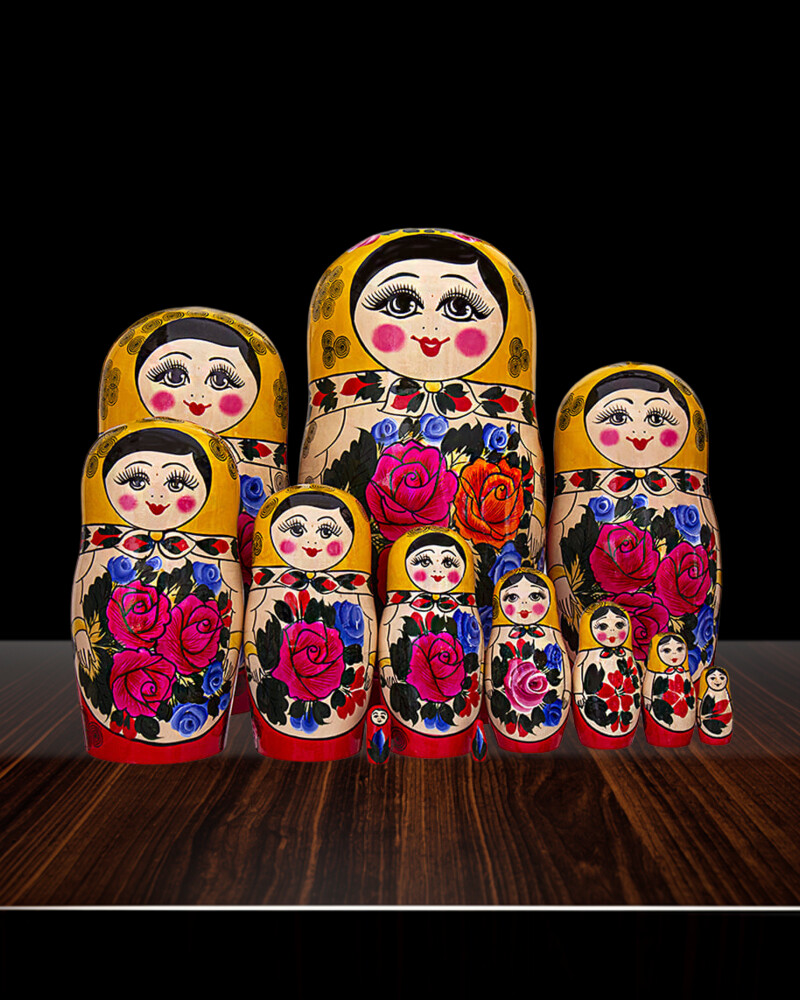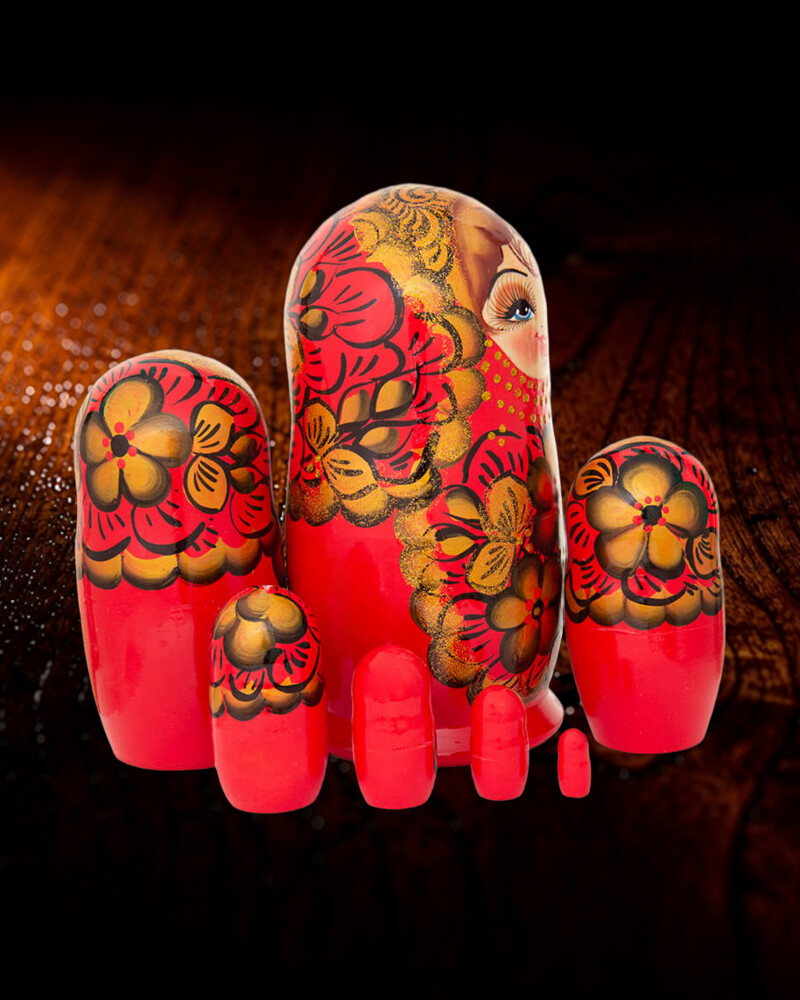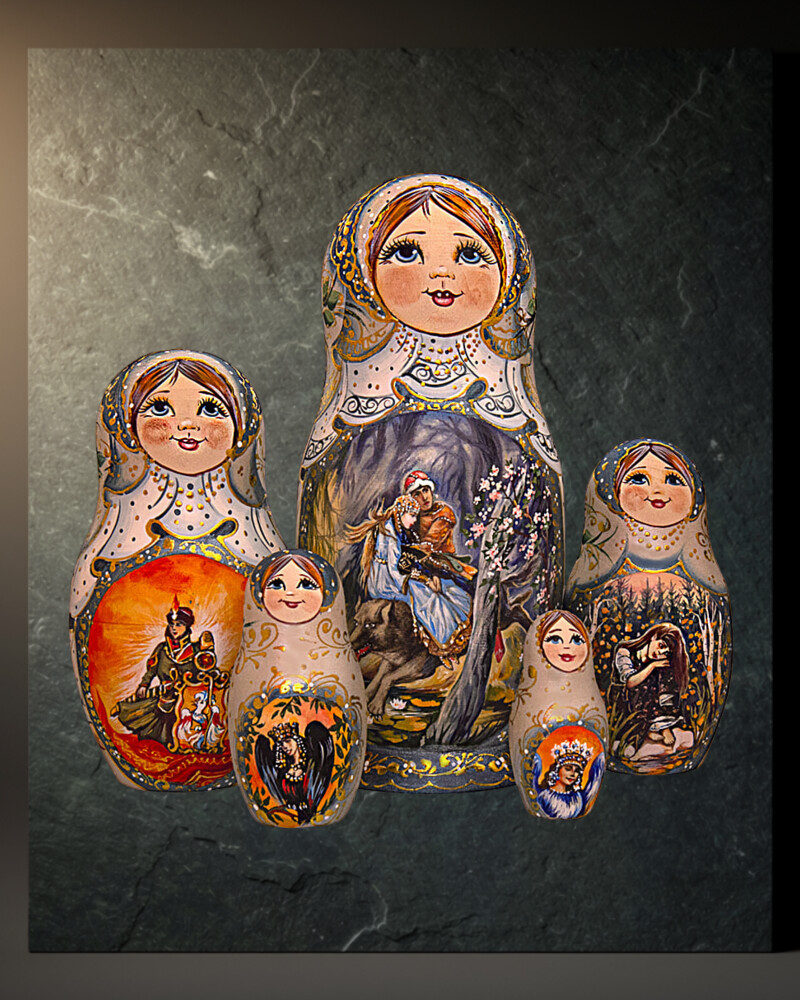
With mass-produced matryoshka flooding the market from China and Southeast Asia, knowing how to identify a genuine handmade Russian piece has become an essential skill for collectors. Here are the key indicators our experts look for.
First, examine the wood. Authentic matryoshka are carved from linden (lime) or birch wood, which has a distinctive warm, creamy color and a very fine, even grain. The wood should feel slightly warm to the touch — not cold like the plastic-coated or heavily lacquered factory pieces. Turn the doll upside down and look at the base: hand-turned pieces will have a small dimple or mark from the lathe center point. The seam where the top and bottom halves meet should be tight but smooth, with no gaps or ridges.
Second, study the painting. Hand-painted matryoshka will always show subtle variations between dolls in a set — no two faces will be perfectly identical, brush strokes will vary slightly in thickness, and colors may shift marginally from one figure to the next. This is not a defect; it is the hallmark of human artistry. Look for a signature, usually in Cyrillic script, on the base of the largest doll. Many artisans also include the year of creation and the workshop or village name. Finally, the lacquer on authentic pieces should be smooth but not mirror-shiny — the traditional Russian lacquer has a softer, more satin quality than industrial coatings.